The Enslaved

by Lynda L. L.

I have been treading, with a certain trepidation, through the veiled tapestry of the plantation’s past, pursuing a truth as elusive as a moonbeam on a polished floor, a matter both heavy with import and slippery in its grasp, much like the silt in a riverbed. The fragile parchments and timeworn ledgers through which I sift, their once-bold script softened by the long slumber of years, now murmur tales of a system that, with unblinking resolve, bound human lives to the stern calculus of lucre. Enslavement in the Americas, one might observe, was no spontaneous blossom of personal animosity in its nascent hours. Rather, it presented as a colder thing, a frosty engine of commerce forged in the fierce crucible of human aspiration. In the sun-kissed expanse of fields, where rice and cane and cotton swayed, the discerning eye of European colonists beheld not mere harvests, but the very foundations of burgeoning empires—wealth that clamored for willing, or alas, unwilling, sinews to coax forth its bounty. Africans, one might note with a certain disquiet, were elected not by the harsh decree of malice, but by the unfortunate confluence of their dispossession: uprooted from ancestral hearths, swept across the ocean's vast, indifferent bosom, and divested of law's comforting embrace. Over time, a delicate, yet terribly resilient, tracery of racial distinction ascended, not as the system's primal germ, but as its cunningly devised framework. The hue of one's complexion, a most visible and lamentable artifice, became the mark, a convenient prevarication to cement the chains of inherited thralldom, ensuring that golden coins, ever-eager, might continue their merry chinking in the coffers of the influential.


Yet, as one turns the pages of the Bryans’ plantation chronicles, one is gently, yet firmly, disengaged from those stark images that so often color our contemplation—the harsh glitter of iron, the sharp report of the lash, or souls bowed low beneath a sky unmercifully blue. That these particular accounts remain silent on such distressing particulars is no proof, alas, of their universal absence, but here, in this specific tableau, a different narrative unfolds. Those bound to toil were, it appears, provided with shelter, sustenance, and the comforting continuity of their families; not, one might surmise, from a spontaneous overflow of human tenderness, but rather from a sober calculation of asset preservation. Each human being, to the Bryans, was a valuable increment, their very breath intricately woven into the grand tapestry of burgeoning prosperity. It is a notion that whispers of unease, gently unsettling the heart’s quiet chambers: for some, the master’s roof might have felt like a fragile haven, a slender thread in a world where liberty was a wager most cruelly stacked against them. The gilded rungs of knowledge, education, and prosperity—those bright avenues to escape—were, by design, kept tantalizingly beyond grasp. Slavery, we must concede, was a mechanism of undeniable cruelty, its grinding gears surely producing a dehumanization beyond all measure, and countless souls endured agonies that no mere ledger, however meticulously kept, could possibly transcribe. These yellowed pages, however, delineate a violence more subtle, a system that, with a certain cold logic, sustained its captives that it might, in turn, sustain its coffers.


Ah, but let us, for a moment, retrace our steps to the nascent dawn of the colonies, and behold how the narrative, like a cunning chameleon, shifts its hue, its outlines becoming sharper, less amenable to comfortable recognition. Ere the weight of iron claimed African shoulders, it was, we discover, the indigenous tribes who first lent their sinews to the demanding tasks, their hands, alas, fueling the eager dreams of a fledgling world. In time’s gentle, yet inexorable, unfolding, African labor assumed prominence, regarded, one might say, as a more pliable currency of exertion, more readily inclined to bend to the imperious will of established power. And here, dear reader, the verdant garden of the past becomes decidedly more thorny, stoutly resisting the neat, pleasing symmetries of our modern recounting: for, against the most formidable of odds, a few courageous Native Creeks and free Black individuals ascended to the ownership of such estates themselves, partaking, one must concede, in the very commerce that ground so many others to dust. Such revelations, I confess, halt one’s stride, compelling a quiet contemplation of their profound, if unsettling, import. Race, then, was revealed not as the primal engine, but rather a cunning lever, a most convenient instrument to delineate and oversee the bound, whilst the unceasing beat of profit provided the system’s very pulse. The truth, as it is ever wont to be, unravels into a most intricately tangled skein, gracefully defying the simpler narratives we fashion to bring order to our yesterdays.


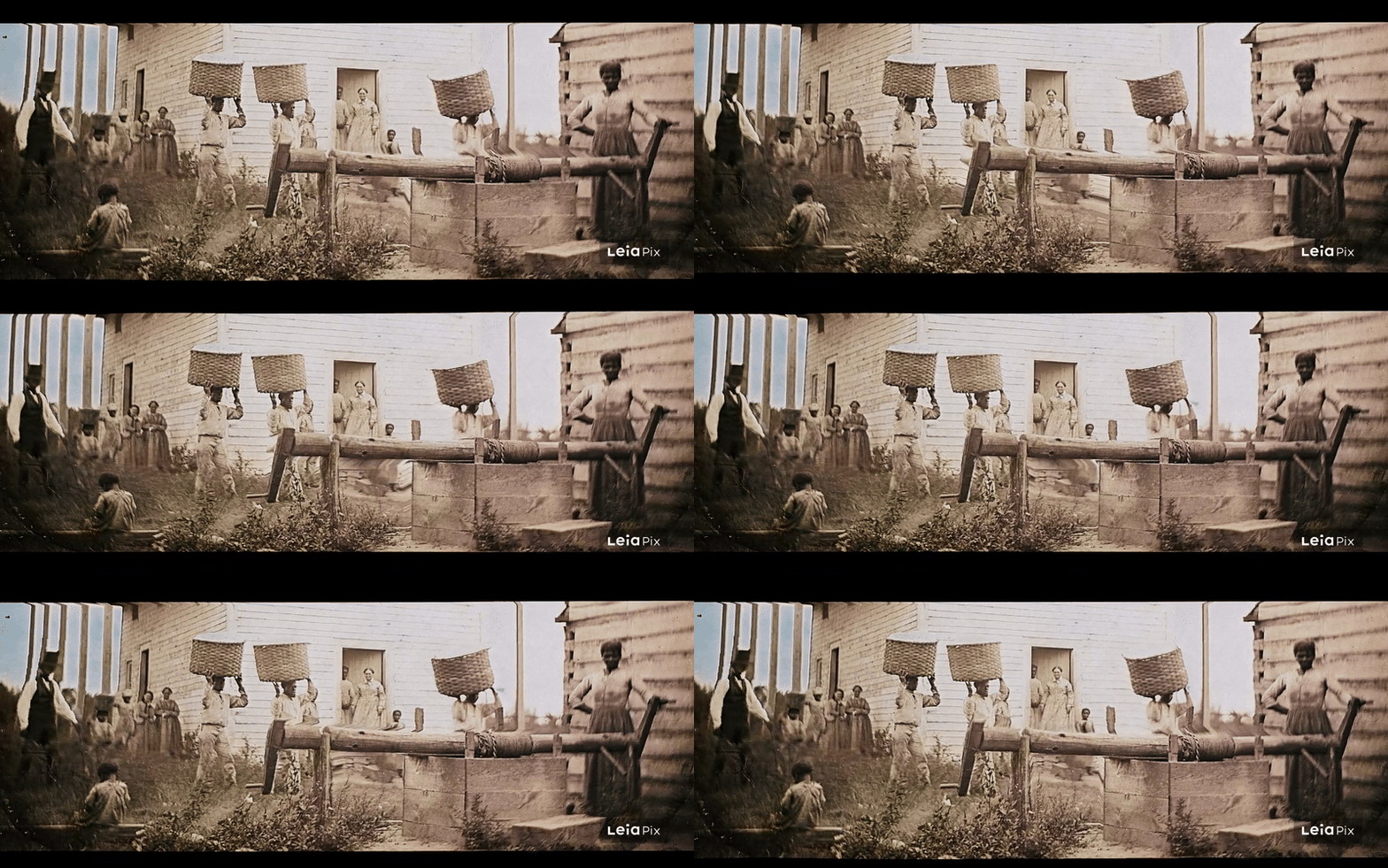
c. 1850 Photo-   Greene County, Georgia  

Nelson-Atkins Museum, Kansas City

(enhanced)


Dug Items- Field Tools