Hollywood Meets History
Shaped in Margaret Mitchell's voice
The past lingers like ivy on the heart of the land, the Bryan Dogtrot stands as a weathered emblem of a South both radiant and shadowed. Its dogtrot frame cradled Nancy Bryan, born in 1834, a daughter of the growing clan. The Bryan family’s world rested on the labor of enslaved souls across 1,200 acres, their names faded in ledgers but etched into the earth’s memory. The house, simple yet steadfast, bore witness to lives caught in a world teetering between promise and peril, its walls humming with the echoes of antebellum days.
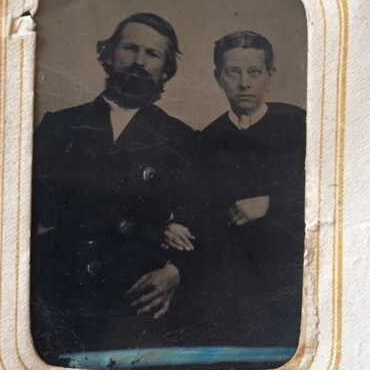
In the spring of 1855, when dogwoods bloomed like bursts of snow in the Georgia forests, Nancy, twenty-one, wed Mayberry Whitehurst. His Gordon plantation, fifty miles off near Griswoldville, sprawled wide, a kingdom of cotton and hope beneath a sky that seemed to vow eternity. By 1864, when war’s dark tide swept over the land, Nancy was no longer the hopeful bride but a mother, her heart bound to four-year-old Thulia, whose laughter echoed through Gordon’s shadowed halls. Yet war spared no tenderness. Sherman’s soldiers descended, their blue ranks a scourge upon the fields. Tents sprouted like thorns across the plantation, and its proud house, once alive with warmth, became a hollowed shell, its rooms seized by Union officers for a fleeting command post. When they marched on, they left ruin—fields charred, dreams reduced to ash, the soul of Gordon torn asunder.

Yet across the churning Ocmulgee River, Nancy's childhood home stood untouched, a quiet haven spared by the river’s embrace. Its currents guarded the house like a sacred vow, too formidable for Sherman’s men to ford in their haste toward Savannah. Unlike fictional grand Tara, the Bryan Dogtrot held a truer South—unadorned, resolute, its spirit rooted deep in the land. That legacy, like a breeze carrying seed, stretched far beyond Houston County through Susan Myrick, Thulia’s daughter and Nancy’s granddaughter. Susan, bearing the scars of a South ravaged by war, became its fierce keeper as the “Emily Post of the South.” On the set of Gone with the Wind, she shaped Clark Gable’s drawl to carry Georgia’s cadence, her pride unyielding. In her 1939 diary, she called Gable “dynamic, quiet, polite, human, and fairly bursting with IT”—words that captured not just a man but the South’s defiant spirit. Susan wove her grandmother’s endurance, her mother’s grace, and the memory of those unnamed souls into a story that reached beyond the Ocmulgee, beyond Gordon’s ashes, to a world that would never forget the South she carried in her blood. A South that was, is, and ever will be.
Susan's Diary- January 17, 1939
“Today I met Clark Gable. He would not have been worth a whole paragraph by himself before today because I have never liked him. But I did like him when I met him. He is dynamic, quiet, polite, human and fairly bursting with IT. … “How’m I doin’? Falling for the movie idol of a billion femmes. George’s secretary, a darling gal named Dorothy Dawson, called me and said would I come in please. Mr. Gable was in Mr. Cukor’s office. I powdered my face, fixed my lipstick and went in. There sat the God on the sofa beside Cukor and before him stood Lambert, of wardrobe, Plunkett of costume design and two other men with note books. Clark had a dozen sketches before him. He rose as I came into the room – so did George – and G said ‘Miss Myrick this is Mr. Gable.’ I murmured how do you do but he stepped forward, offered his hand, turning on the full force of smile and dimple and said ‘I am so glad to meet you, Miss Myrick.’”

Clark Gable and Susan Myrick on set*
*Susan Myrick of Gone With The Wind: An Autobiographical Biography, by Susan Lindsley